


Key Takeaways:
- Goal Setting is magical! What other single action can you do that will improve your effort, persistence, motivation, focus, self-efficacy, and actual task performance?
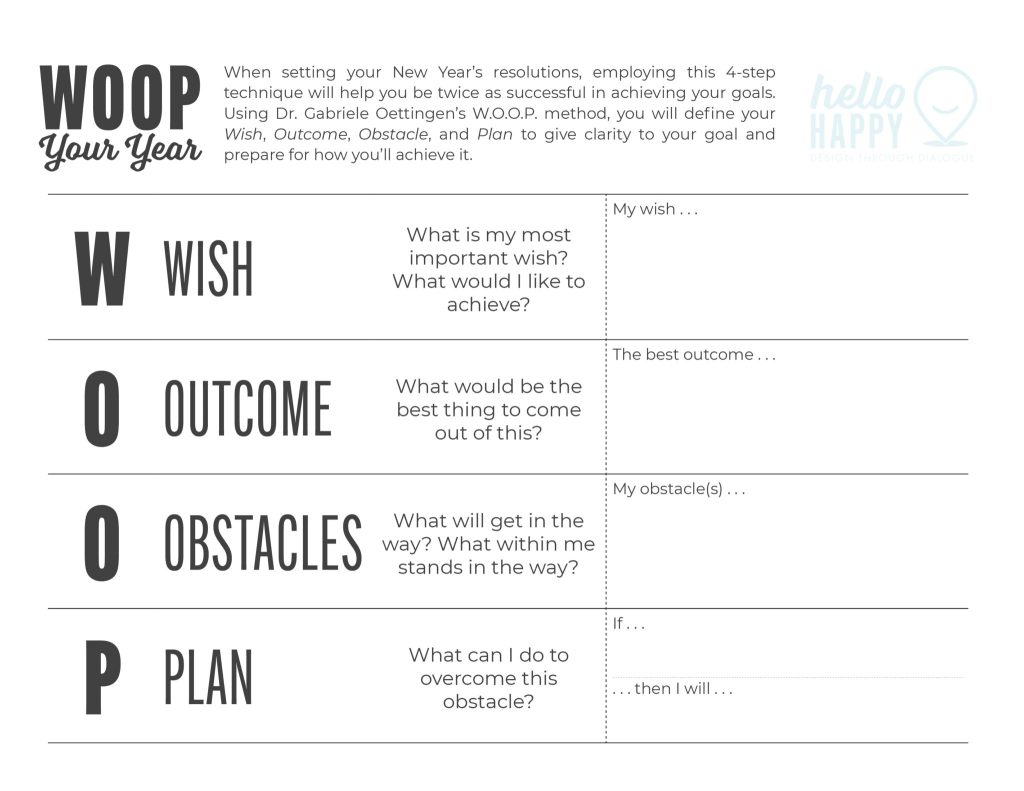
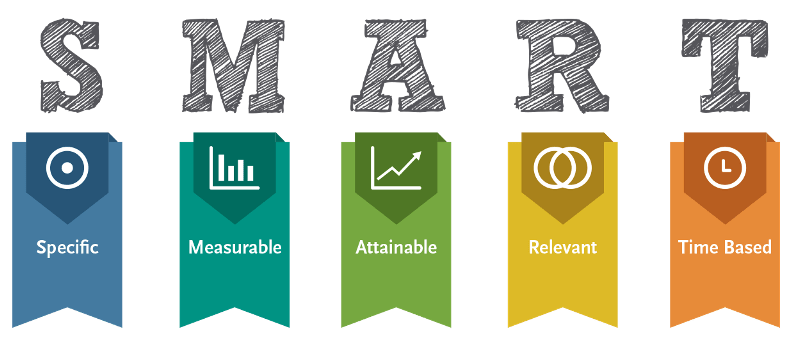
- SMART (Specific, Measurable, Achievable, Relevant, and Timely) and WOOP (Wish, Outcome, Obstacle, and Plan) are goal setting rubrics that can help you be set higher-quality goals right away.
- After the freshman 100-level intro class, a senior goal-setting class would cover Locke & Latham’s Goal Setting Theory factors: clarity, challenge, commitment, feedback, and complexity.
- Coaches are very skilled at assisting clients with goal setting. Thus, a coach can be an incredibly effective tool to help you achieve your personal or professional goals.
Making your own magic
P1: We live in an age of easy life hacks – clickbait ads imploring us to follow “one simple trick” to easily fix a previously intransigent problem. Need to lose weight? Eat this one superfood. Need to get in shape? Just do this one exercise for a few minutes a day and you’re all set. I’m a generally skeptical person with a very robust “nothing good comes easy” alarm, so my natural reaction is to roll my eyes and move on whenever I come across these things.
But… what if I told you there REALLY IS one simple way that you can give your professional career direction, improve workplace performance, generate internal motivation, make your day-to-day life more purposeful, and leave you quantifiably better afterwards???
Are you done rolling your eyes? Good. Because, my friends, such a thing does exist. And it is the simple act of goal setting.
In its simplest form, goal setting is an act of deciding you want to do something and how you plan to do it, with an implication that this action will occur over some unit of time. With that obligatory definition provided, let’s get into the data. Much of the goal setting evidence comes from education and psychology literature, and there is plenty of it. Goal setting has been found to lead to: improved effort, more persistence in the face of obstacles, better motivation, more focus, improved self-efficacy, and better task performance (Locke & Latham 1990; Locke & Latham 2002; Zimmerman 2002; Bandura & Schunk 1981).
The anatomy of a high-quality goal
To be clear, I’ve used a little light humor in presenting the magical quality of goal setting. Obviously this isn’t a set-it-and-forget-it situation, and it would be horribly misleading to imply that merely setting the goal means you can kick back and wait for the world to come to you. But, it would be entirely accurate to say that intentional, effortful goal setting leads to cascading positive effects. So, if you genuinely put in the effort to make high-quality goals, you indeed will be well on your way to reaping those rewords.
So: what factors impact the quality of a goal? According to Goal Setting Theory (Locke & Latham, 1990), the key factors that determine goal quality and, in turn, the benefits you can reap from this practice, are:
- Clarity: Clear goals outperform vague goals every time
- Challenge: The higher the bar, the higher you find yourself jumping
- Commitment: Setbacks are inevitable; “sticktoitiveness” pays off
- Feedback: We suck at self-assessment; external feedback is critical
- Task Complexity: if it’s not managed properly, complexity becomes overwhelming and hinders goal-setting effectiveness
There are a number of popular rubrics for goal setting that incorporate many of these factors: WOOP (Wish, Outcome, Obstacle, Plan) and SMART (Specific, Measurable, Achievable, Realistic, & Timely). Both have been used within medical education, but to my knowledge there is no “head to head” evidence to suggest one or the other. Indeed, I think they are both imperfect, but they’re both great memory devices to help you be more deliberate and structured in your goal setting. I personally use these every time I work with newcomers to goal setting.
Practical Tips for goal setting
For starters, force yourself to actually set goals. Is that a “duh” statement? Yes, yes it is. But that’s because it’s easy to just dive into your day and address whatever comes up, but this approach will inevitably be more inefficient and less productive. Goal setting requires discipline, and integrating it into your routine activities is Step 1. Make yourself set at least one specific goal a day to build the habit, and then take it from there.
Below are other tips for improving your goals that address each of Locke & Latham’s factors:
Clarity –> Use a rubric: Goal setting rubrics are like clinical decision rules: they are helpful simplifications that capture a general concept, but they shouldn’t be followed blindly without any critical thought. Still, for most people in most circumstances, SMART or WOOP will help you write clearer, better-structured goals.
Challenge –> Aim high: Task performance is linearly associated with goal difficulty. So, assuming adequate ability and commitment, the harder the goal, the better the performance (Locke & Latham 1991). Or, to steal from those cloyingly annoying motivational posters: shoot for the moon and miss, you’ll still be among the stars.
Commitment & Feedback –> There are two helpful practices here:
- Go public: Telling others is massively effective at driving engagement. In fact, tell the person who’s going to stick it to you (aka provide feedback) if you start slacking (Hayden 2013)
- Partner-up: Building on the same principle as “going public,” creating a partnership to achieve a common goal is a great practice. Think about it: it’s easy to skip out on going to the gym because you’re tired in the morning; it’s a lot harder to skip out on a scheduled meet-up with someone else. Having an partner who is also striving to achieve the same/similar goal is a boon for accountability
Task Complexity –> Task complexity can negatively impact the influence of goal setting if you’re not careful!
- Create a strategy: simply setting difficult goals for difficult tasks will not work (this is an exception to the “aim high” principle above). If you have a strategy,
- Break the task down into smaller/process goals: Instead of holding yourself to the standard of the finished outcome, focus on processes that will lead to that outcome. So, if you’re looking to improve your patient satisfaction scores (a complex task), don’t just focus on the outcome goal (a specific score). Instead, identify processes (e.g. greeting every patient with a smile and clearly identifying yourself) first and then, once you’ve mastered those processes, aim for outcomes.
Bringing it Back: Goal Setting & Coaching
One of the foundational services of a coach is the ability to help their coachee turn a vague desire to do something new/better into a well-articulated, realistic, achievable, and measurable goal. My hope is that this post can help you set better goals, but it can still be harder than it looks.
Goal-setting is like any other skill: it takes practice to get good at it. On top of that, there are so many ways by which we can be our own worst enemy: procrastination, blind spots, life stress, decision paralysis… the list goes on and on. A good coach will be tenaciously supportive in your efforts to create high-quality goals. And, as motivational speaker (and child of alteration enthusiasts) Zig Ziglar said, “A goal properly set is halfway reached.”
Helpful Resources
Goal setting Assessment: Are you a medical educator looking to teach/assess goal setting in your learners? This MedEdPortal resource by Lockspeiser et al. is for you
The WOOP and SMART images above contact links out to the original content for both – they are great resources for more on these rubrics
Finally, there are innumerable sites discussing the topic of goal setting, ranging from area of focus (education, health & wellness professional, etc.) to depth of discussion (practical review vs deep-dive of literature). Let your fingers do the googling!
Have any helpful approaches, tips, or wisdom about goal setting?
Post References
- Bandura A, Schunk DH. Cultivating competence, self-efficacy, and intrinsic interest through proximal self-motivation. Journal of personality and social psychology. 1981;41(3):586.
- Hayden CJ. Get Clients Now! Amacom; 2013.
- Locke EA, Latham GP. A Theory of Goal Setting & Task Performance. Englewood Cliffs: Prentice-Hall; 1990.
- Locke EA, Latham GP. Building a practically useful theory of goal setting and task motivation: A 35-year odyssey. American psychologist. 2002;57(9):705.
- Zimmerman BJ. Becoming a Self-Regulated Learner: An Overview. Theory into Practice. 2002;41(2):64-72.
Available for:
- Grand Rounds
- Faculty Development
- Scholarly Collaborations
- Professional, Scholarly, or Leadership Coaching
Contact Jeremy Branzetti
Copyright 2022, Jeremy Branzetti. All rights reserved.
 Jeremy Branzetti: Clinician. Educator. Scholar. Coach.
Leave a comment